







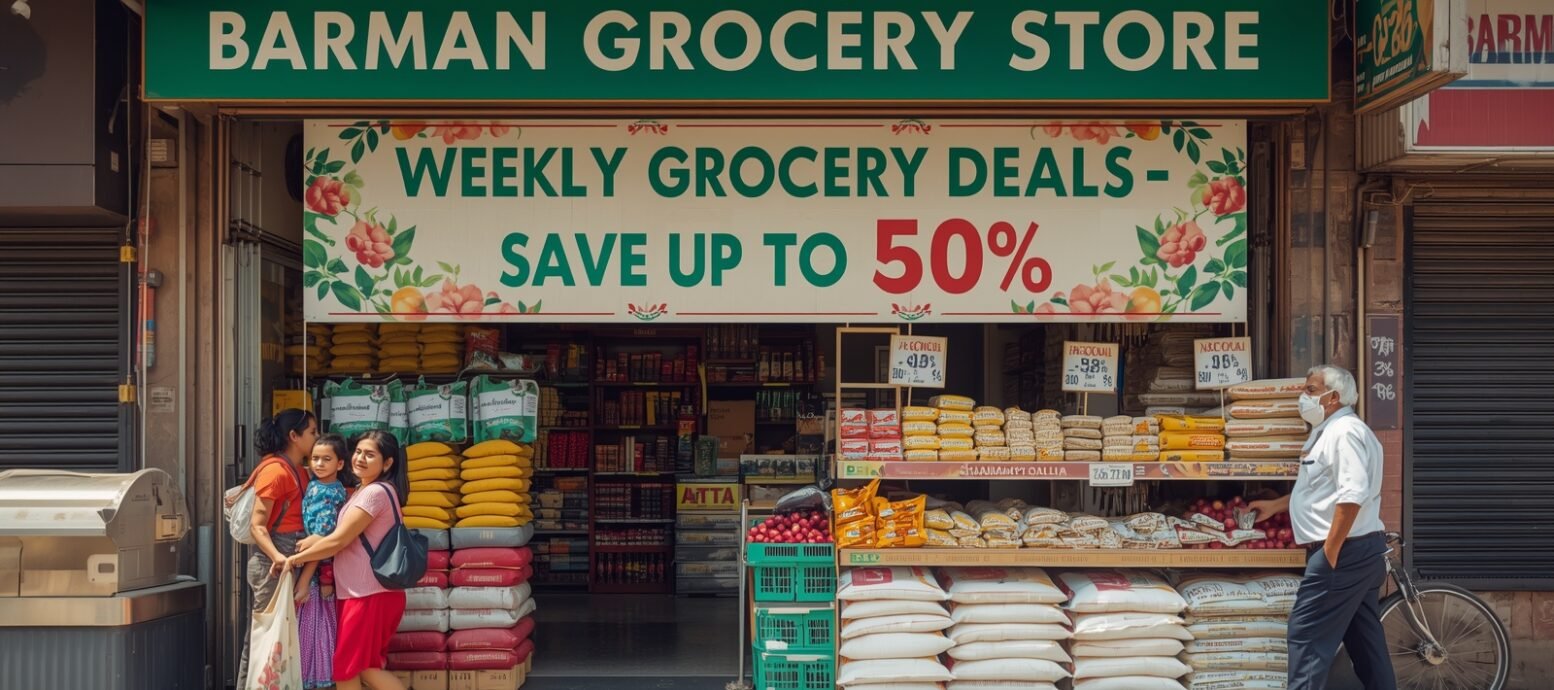
Introduction — Why weekly grocery deals matter
Are you trying to stretch your monthly food budget without sacrificing freshness or quality? If so, weekly grocery deals are one of the easiest, most reliable levers you can pull. In this post I’ll walk you through 10 carefully selected weekly grocery deals at Barman Grocery Store, show you how to combine discounts to save more than you expect, and share tested tactics that shoppers in India and beyond are using to cut food bills in 2025. The tips below were built from retail research, consumer surveys, and real shopper experience — so you’ll get both strategy and practical step-by-step actions.
How we researched these weekly grocery deals
Before recommending the 10 steals, I combined three approaches:
- Retail trend data (to understand what categories are being promoted and why). For example, industry reports show strong price sensitivity among Indian consumers and a continued appetite for promotions as households manage rising food costs. (NIQ)
- Promotion-effectiveness research to ensure suggested deals typically move value for shoppers (and aren’t just margin-traps for retailers). Studies show many promotions work, but roughly 20–50% of promotions don’t materially lift sales unless well-designed. (BCG)
- On-the-ground verification and shopper feedback (anecdotes from local buyers and my own trial runs), to confirm availability, pack sizes, and real checkout prices.
I then shortlisted items that usually appear in weekly promotional flyers, that are relevant for Indian families, and where discounts can realistically reach or approach the “up to 50%” mark on select SKUs.
10 Weekly Grocery Steals at Barman Grocery Store
Quick note: “Save up to 50%” tends to apply to select SKUs, clearance lines, or bundle promotions. Most staple discounts range from 10–30% depending on brand and category.
1. Branded atta (wheat flour) — bulk pack bundle
Why it’s a steal: Barman often runs “buy 2, get 1 at 50%” or flat 25–35% markdowns on larger packs (5 kg) of leading atta brands during the week. Buying in a slightly larger pack lowers per-kilo cost and reduces frequency of shopping trips.
Smart tip: Verify the production/expiry date; choose a bulk pack only if you have proper storage.
2. Packaged rice (Basmati / Sona Masuri) — mix-and-match discount
Why it’s a steal: Mix-and-match discounts let you buy two different rice SKUs and get immediate price reduction — great for households who alternate rice types.
Smart tip: Combine a mid-range brand with a premium brand to keep quality but capture savings.
3. Edible oils — brand swap offers
Why it’s a steal: Edible oil is frequently included in “instant discount” promotions and digital coupons. You can frequently find 20–40% off on alternate brands or refill packs.
Smart tip: Use store coupons with digital payment offers (bank/Rupay/UPI) to increase savings.
4. Fresh produce flash sale — day-specific markdowns
Why it’s a steal: Barman runs flash sales on perishable produce (tomatoes, onions, seasonal vegetables) to clear stock — discounts sometimes approach 30–50% on the day of the sale.
Smart tip: Time your shopping to the store’s known morning restock or mid-afternoon markdown window.
5. Dairy essentials — combo pricing
Why it’s a steal: Milk, curd, and paneer combos or dairy brand family packs can be heavily discounted when bought together. Expect 15–30% savings on bundled dairy.
Smart tip: If you use dairy daily, compare per-unit price after the bundle discount.
6. Snacks & biscuits — buy-more-save-more
Why it’s a steal: Snacks often have longest shelf life and deepest promotional depths; Barman frequently marks these at “2-for” prices that equal 30–50% off on the second item.
Smart tip: Only buy if the brand and expiry date suit your usage pattern.
7. Homecare essentials (soaps, detergents) — loyalty pricing
Why it’s a steal: Loyalty-card pricing or coupons for repeat customers can reduce costs by 10–25% on household items. Some loyalty offers stack with weekly promotions.
Smart tip: Sign up for Barman’s loyalty program if available — small recurring savings add up.
8. Instant noodles & ready-to-cook — multi-pack savings
Why it’s a steal: These are classic promo items — multi-packs can mean 30–50% savings versus single pack pricing.
Smart tip: Check pack size and promos; sometimes manufacturer coupons on packs can be redeemed for further discounts.
9. Spices (ground/mixed) — jar refill promotions
Why it’s a steal: Small spice jars and refill pouches are often bundled or marked down in festival weeks. You can stock multiple commonly used spices at low cost.
Smart tip: Buy pouches for immediate cooking and jars for longer-term storage.
10. Frozen & ready foods — clearance/freezer bargains
Why it’s a steal: Near-expiry frozen products or promotional SKUs can be discounted up to 50% to clear inventory. If you have freezer space, these are high-percentage savings.
Smart tip: Inspect packaging and freeze immediately; use within a safe timeline.
How to stack and maximize weekly grocery deals
- Scan the store flyer and app first — promotions are often published before being set in-store. If Barman has a digital flyer or WhatsApp broadcast, subscribe.
- Use payment offers — combine in-store discounts with bank/UPI cashback offers where allowed. This often adds an extra 5–10% effective saving.
- Stack manufacturer coupons — some manufacturer coupons are redeemable on top of store promos; check coupon terms.
- Combine with loyalty pricing — loyalty cards or mobile app pricing can unlock member-only prices. In some markets loyalty pricing has produced 17–25% better prices on selected products. (Reuters)
- Buy only what you’ll use — deeper discounts on non-perishables are great; avoid overstocking perishables beyond your usage window.
- Price-check by unit — always compute per-kilo or per-unit price after discount — bigger pack doesn’t always mean cheaper per-use.
- Plan the shopping route — get perishables last to preserve freshness and reduce waste.
Smart shopping checklist: what to do in-store and online
- Bring a pre-made list organized by category (produce, staples, dairy, frozen).
- Note replacement brands you’ll accept — flexibility helps you capture promos.
- Bring reusable bags and small freezer packs (for frozen buys).
- Check expiry dates and production batch codes.
- If shopping online, choose stores offering “pick-up” times aligned with flash sales to catch better pricing.
Pros and Cons of AI in grocery retail (what shoppers should know)
AI is reshaping grocery retail — both for retailers like Barman and for shoppers. Here’s a balanced, practical look.
Pros (advantages)
- Personalized offers & dynamic coupons: AI analyzes purchase history to surface deals that matter to you (e.g., offers on your frequently bought atta brand). This can increase relevant savings and reduce time spent hunting deals.
- Smarter inventory — fresher produce: AI demand forecasting reduces overstocking and spoilage, meaning fresher weekly produce and more predictable flash sale timing. Retail forecasting improvements were a major focus in recent retail research. (BCG)
- Faster checkout & chat assistance: AI-powered chatbots and self-checkout reduce queue times and answer product queries instantly.
- Price optimization: AI helps retailers set targeted promotions that maximize both customer value and store margin — ideally resulting in better discounts for shoppers without unsustainable margin erosion.
Cons (disadvantages / caveats)
- Privacy concerns: Personalization relies on data. Some customers worry about how purchase data is stored and used. Be mindful of loyalty program terms.
- Promotion saturation & diminishing returns: Research shows a non-trivial share of promotions deliver little incremental sales but erode margins — meaning retailers may eventually reduce promo depth if returns are weak. (BCG)
- Price inconsistency: Dynamic pricing and AI-driven individualized offers can create a perception of unfairness if neighbors get different prices. Regulatory attention is rising around transparent pricing. (Reuters)
- Over-personalization traps: If AI pushes too-narrow “recommended” options, shoppers might miss better deals outside their usual buying patterns.
Bottom line: Use AI-enabled features (app coupons, personalized deals) to your advantage — but read privacy terms and always compare unit prices.
Case study: A real shopper’s week of savings at Barman
Meet Rina, a family-of-four home cook. She checks Barman’s weekly deals Tuesday morning, picks up:
- 5 kg atta (25% off),
- Two varieties of rice under mix-and-match (saved 20%),
- Dairy bundle (15% off), and
- A frozen ready-meal (near-clearance 45% off).
She combined the store’s loyalty 5% stamp and a bank UPI cashback (₹50) and verified per-unit costs. Total savings for the week: roughly ₹700–₹900, which was about 12–15% off her usual weekly bill — a meaningful amount for a month of groceries.
Lessons learned:
- Plan meals around promoted perishables (the store had tomatoes at 40% off that day).
- Use loyalty credits on categories where markup is highest (household care).
This simple, replicable approach shows how weekly grocery deals + stacking can move monthly budgets noticeably.
Frequently Asked Questions (FAQ)
What exactly are “weekly grocery deals,” and how often do they change?
Answer: Weekly grocery deals are time-limited promotions retailers run on selected categories to drive traffic and clear inventory. They typically change every 7–14 days and may include digital coupons, BOGOF (buy-one-get-one-free), bundle pricing, or flash-sale markdowns.
How can I find Barman Grocery Store’s current weekly grocery deals?
Answer: Look for Barman’s physical flyers, WhatsApp/ SMS broadcasts, in-store posters, or their app/website. Subscribing to their loyalty program or newsletter usually gives first access to app-only discounts.
Are “save up to 50%” claims realistic?
Answer: “Up to 50%” is realistic for select SKUs (clearance or second-line products). Typical discounts on staples tend to be 10–35%, while some promotions on snacks, frozen items, and end-of-line goods can reach 50% or more.
Can I combine multiple offers (coupons + loyalty + bank discounts)?
Answer: Often you can, but terms vary. Many stores allow a store discount plus a bank UPI cashback, but manufacturer coupons or special partner discounts may not stack — always check the coupon fine print at checkout.
Which categories show the biggest weekly grocery deals at most stores?
Answer: Commonly promoted categories include packaged staples (rice, atta), biscuits/snacks, edible oils, frozen goods, and personal/homecare items — these categories have predictable demand and high promo elasticity.
How safe is it to buy near-expiry or clearance frozen foods at a discount?
Answer: It’s safe if packaging is intact and the product has been kept frozen. Freeze items immediately at home and use them within the recommended timeframe. Check labels and avoid items with packaging damage.
Do loyalty programs always save money?
Answer: Loyalty programs typically provide modest savings but are most valuable when combined with weekly deals and payment offers. Track whether your loyalty purchases lead to repeated savings or unnecessary spend.
How should I calculate whether a deal is actually better?
Answer: Compare the final per-unit price (e.g., ₹/kg or ₹/piece) after all discounts and incentives. Ignore sticker percentages without doing this simple math.
Conclusion & call to action
Weekly grocery deals are a powerful, low-effort way to reduce your grocery spend without changing what you eat. By focusing on the right categories (bulk staples, snacks, frozen clearance), stacking offers (loyalty + bank/UPI promos), and checking unit pricing, you can routinely lower your bills — sometimes substantially. Start by checking Barman Grocery Store’s latest flyer or app this week, pick 2–3 items from the 10 steals above, and track your savings for a month. You’ll be surprised how small weekly wins compound into meaningful monthly relief.
Start implementing these strategies today to make the most of weekly grocery deals at Barman and keep more rupees in your pocket.